Quick answer
Our railing repair service fixes loose posts, broken balusters, cracked welds and rusted bases on porch, stair, deck and balcony railings, right at your home. We also build new handrails and guardrails in steel, aluminum or stainless, sized to typical residential safety guidelines and finished to match your house.
Key points
Loose posts re-anchored in concrete, brick, stone or wood
Broken balusters and cracked welds repaired in place
New handrails added for aging family members and visitors
Steel, aluminum and stainless railings built to fit
Rust at post bases cut out and sealed against water
Heights and spacing checked against typical residential guidelines
Signs a railing is no longer safe
Railings tend to fail slowly, which is why people stop noticing. If you have started to avoid leaning on a rail, it is time for railing repair. Walk your steps and porch and look for any of the warning signs below.
Movement at the top of a post when you push on it with one hand
Rust bubbling or flaking where posts meet concrete or brick
Cracks in the concrete or mortar around post anchors
Balusters that rattle, have broken welds or are missing entirely
A handrail that ends before the last step or has open, snag-prone ends
Gaps between balusters large enough for a small child's head
Typical height and spacing guidelines for home railings
Residential codes based on the International Residential Code are widely used across the country. Under those guidelines, guards are typically required where a porch, deck or balcony is more than about 30 inches above the ground, and residential guards are typically at least 36 inches tall. Openings between balusters are typically small enough that a 4-inch sphere cannot pass through.
Stair handrails are typically mounted between 34 and 38 inches above the stair nosings and must be easy to grip, which is why a wide flat bar on its own often does not qualify. Local rules can differ and older homes may predate current standards, so confirm requirements with your local code official before a new installation.
When we repair an older railing, we will point out if it falls short of these typical guidelines and offer simple upgrades, such as adding intermediate balusters or a graspable handrail on top of a flat cap.
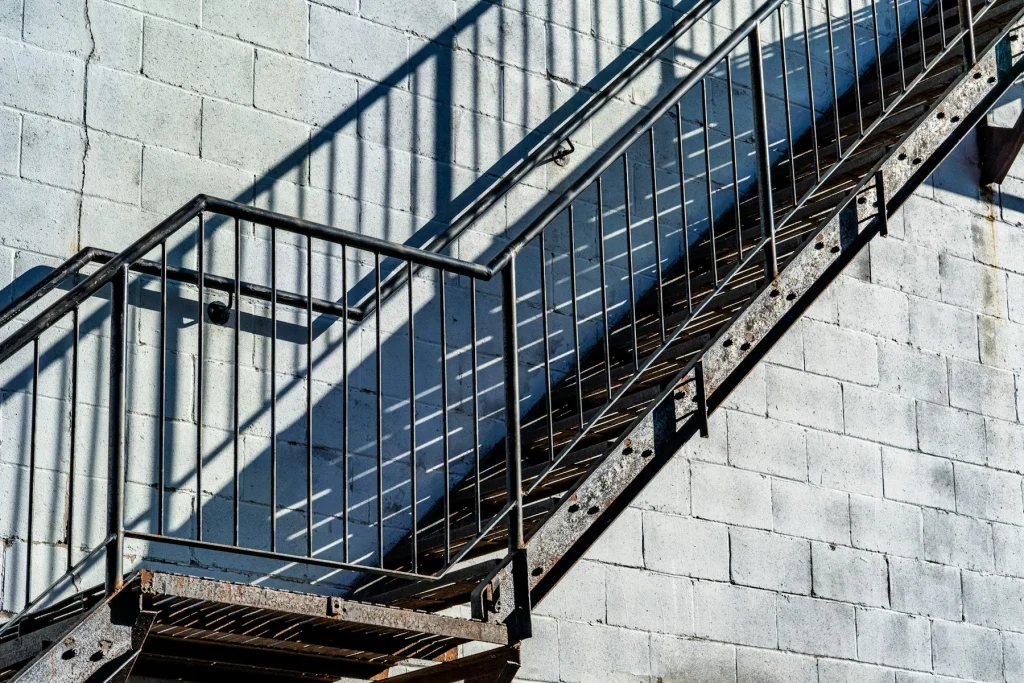
Railing repair for loose posts in concrete, brick and wood
Most wobbly railings are not broken in the middle. They are loose at the anchor. How we fix that depends on what the post is set into. In concrete steps, posts are often set in core-drilled holes filled with grout that has cracked over time. We cut the rusted post off, core or clean the hole and set a new post section in anchoring cement, or we weld the post to a new surface-mount base plate secured with concrete anchors.
In brick or stone, we avoid drilling into weak mortar joints and anchor into solid masonry instead. On wood decks, metal posts are usually bolted through the rim joist with blocking behind it, and we replace stripped lag screws with through-bolts. Each method is chosen so the railing holds when someone falls against it, not just when it is standing still.
New handrails for aging parents and visitors
Some of our favorite jobs are the simplest. A family has a parent moving in, or grandparents visiting more often, and three concrete steps at the front door suddenly feel risky. A single sturdy handrail, or one on each side, makes a real difference.
We build handrails from round pipe or rounded rectangular tube so they are easy to grip, extend them past the top and bottom steps, and return the ends toward the wall or post so sleeves and bags do not catch. Rails can be mounted on posts set in the steps or on brackets attached to the house. If someone uses a walker or cane, tell us, and we will think about height and placement with that in mind.
Steel, aluminum or stainless: which railing metal fits your home?
Mild steel is the classic choice. It is strong, easy to weld and repair, and works well for traditional picket, scroll and modern horizontal designs. It needs paint or powder coat to resist rust, and touch-ups every few years. Aluminum is lighter, will not rust and suits coastal and very wet areas, though it costs more and is welded with TIG.
Stainless steel, typically grade 304 or the more corrosion-resistant 316 near salt water, gives a modern look with little maintenance. Many homeowners mix materials: a steel railing with a stainless cap, or an aluminum guard with a wood top rail. If you are planning a matching gate or fence, see our gate and fence welding pages for coordinated options.
How a railings & handrails job works with San Antonio Mobile Welder
01
Share the steps
Send photos of the railing and the steps, plus what the steps are made of: concrete, brick, stone or wood.
02
Check the anchors
On-site, we test each post, look at the masonry or framing around it and measure heights and baluster spacing.
03
Repair or build
Posts are re-anchored, cracked welds and balusters repaired, or new rails fitted and welded on-site.
04
Seal, finish and test
Bases are sealed against water, metal is primed and painted, and we load-test every post before we leave.
Finishes that keep a railing from rusting at the base
Water is the enemy of a steel railing, and it always collects at the bottom. A good repair is only half the job. We seal the joint where the post meets concrete with a sloped cap of anchoring cement or a sealant so water runs away from the steel instead of pooling against it.
All bare metal gets a rust-inhibiting primer and a finish coat. For outdoor stairs that see heavy weather, we can recommend sending new railing sections out for hot-dip galvanizing or powder coating before installation. More on caring for steel in different climates lives on our blog.
Do I need a permit for a new railing?
Repairing an existing railing usually does not require a permit. Adding a new guardrail on a raised deck or replacing a full stair railing sometimes does, depending on your city. HOA and historic district rules may also cover the design. We recommend calling your local building department before a brand new installation so there are no surprises.
We are happy to provide a simple sketch with dimensions and materials for your permit application or HOA review. Our about page explains how we put quotes and plans in writing.
Frequently asked questions
Can a loose iron railing be fixed without replacing it?
Usually, yes. Most loose railings are only failing at the anchors, where rust or cracked concrete lets the post move. We cut away rusted metal, set the post in fresh anchoring cement or weld it to a new base plate, and repair any cracked welds along the rail. Full replacement is only needed when rust has spread through much of the railing.
How tall should a porch railing be?
Under widely used residential code guidelines, guards on porches and decks more than about 30 inches above grade are typically at least 36 inches tall, with openings small enough that a 4-inch sphere cannot pass. Some cities require more, so always confirm with your local code official. We measure existing railings and point out any gaps.
Can you add a handrail to concrete steps?
Yes, it is one of our most common requests. We either core-drill the steps and set posts in anchoring cement, or use surface-mount base plates with concrete anchors. Rails are made from easy-to-grip pipe or tube, extend past the top and bottom steps, and have returned ends so clothing does not catch.
Will welding damage my brick or paint?
We take care to prevent that. Welding sparks and grinding dust can mark brick, stone, siding and fresh paint, so we use welding blankets and shields around the work area. When a railing sits right against the house, we sometimes weld sections nearby and bolt them in place to keep heat and spatter away from finished surfaces.
Which is better for a railing, aluminum or steel?
Both work well. Steel is stronger for its size, easier to repair and usually less expensive, but needs paint to resist rust. Aluminum will not rust, which helps near salt water and in rainy climates, but costs more and is less rigid. Stainless is a low-maintenance option for modern designs. We help you choose based on your home and climate.
Can you match my existing railing style?
In most cases, yes. We carry common square and round baluster sizes and can source standard castings like collars, baskets and scrolls. For older or custom styles, we pick the closest profiles and keep spacing consistent. Paint is matched for color and sheen, so a repaired section blends in with the rest of the railing.